ARTIFICIAL INTELLIGENCE · CREATIVITY · CULTURE · FUTURE OF WORK
AI Can Play the Notes. Can It Understand the Song?
What learning guitar teaches us about artificial intelligence, creativity and the parts of life that cannot be automated.
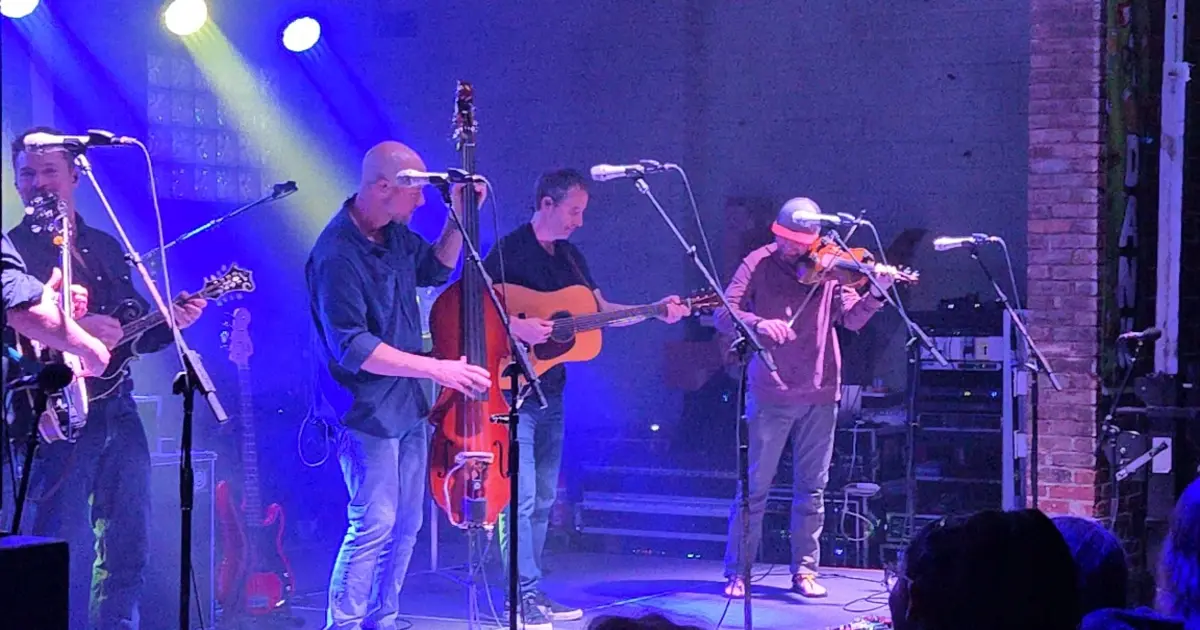
You can hear the song in your head. You know the moment when the guitar should enter, how the rhythm should settle, and where the sound should open up. Then you put your fingers on the strings. Nothing in your hands agrees with what your ears already know.
One finger mutes the string beside it. The next chord arrives half a second late. The pick catches. The rhythm that felt obvious while listening suddenly feels like trying to pat your head, rub your stomach, and remember where three fingers belong at the same time.
That small frustration explains something important about artificial intelligence. Access to an answer is not the same as the ability to use it. A system can generate a polished result without having a human life behind that result. A person builds ability through feedback, memory, mistakes, relationships, responsibility, and thousands of decisions that rarely appear in the finished work.
1. Almost everyone likes the idea of playing guitar
The guitar sells a powerful promise. Learn a few shapes, sit down with friends, and make something recognizable. The instrument looks simple enough. Six strings. A row of frets. Chords that fit on a small diagram.
The dream is immediate. The ability is not. Beginners discover that the instrument asks several systems to cooperate. The left hand forms a chord while the right hand keeps time. The ear notices a buzz. The brain compares the sound coming out with the sound it expected. The hands make a correction, often too slowly, and try again.
Researchers call part of this a feedback loop. In plain language, you act, listen, compare, and adjust. A 2022 study in Scientific Reports examined auditory and motor feedback in guitarists and pianists. Its details are more careful than the familiar phrase “practice makes perfect,” but the larger point is easy to recognize: learning music joins sound, movement, expectation, and correction.
2. A guitar does not make everyone sound the same
Give ten people the same guitar and the same chord chart, and you will not get one performance repeated ten times. One player rushes. Another leaves room. One strikes every string with equal force. Another lets the bass note arrive first and the higher strings follow behind it.
The instrument sets boundaries. It does not settle the musical choices inside them. Timing, pressure, dynamics, tone, confidence, and restraint change what the listener hears. Even silence has a shape. The pause before a chorus can create more expectation than another handful of notes.
AI works with boundaries too. A music model can identify and generate patterns found across recordings or symbolic music data. It can produce output that people interpret as calm, tense, familiar, or surprising. That does not establish that the system experiences calm, tension, memory, or surprise as a person does. Pattern recognition, generated output, and human experience are different claims.
3. The hard part was never locating the notes
Imagine an 11-year-old with a phone and an old acoustic guitar. Within minutes, the child can find a beginner tutorial, tune every string with an app, slow the lesson to half speed, photograph a chord chart, and ask AI why a chord keeps buzzing.
This is real progress. A teacher may not be available at 9:30 on a Tuesday night, but the information is. The child can see where each finger goes and hear the target sound as many times as needed. Technology has removed several barriers that once made learning slower or more expensive.
Then comes the chord change. The index finger has to release one string, travel, rotate, and land in the new position while two other fingers move somewhere else. The strumming hand has to keep the beat while the fretting hand is still negotiating. The ear has to notice whether the change arrived cleanly. None of those skills appears merely because the correct answer is glowing on the screen.
Watching 100 hours of guitar videos is not the same as playing guitar for 100 hours.
Information can guide practice. It cannot substitute for the physical coordination, muscle memory, attention, and listening that practice creates. Muscle memory is not a little file stored in the hand. It is a useful name for movement patterns the nervous system learns to organize with less conscious effort. That automaticity frees attention for the song.

4. Knowing what sounds right is different from producing it
Most listeners can recognize when a familiar rhythm falls apart, even if they cannot explain the error. Recognition is valuable, but it is not performance. Producing the rhythm requires the body to place events in time with enough consistency that other people can feel the same pulse.
This difference appears at work. A manager may recognize a good report yet be unable to build one. A customer can tell when an explanation is confusing without knowing how to repair it. An AI system can generate five acceptable drafts, but someone still has to notice the sentence that is technically smooth and practically wrong.
The person who makes that call is drawing on taste. Taste is not magic and it is not merely preference. It is pattern recognition shaped by consequences. Over time, people learn which details matter, which shortcuts fail, what their community recognizes as honest, and when a technically correct answer misses the point.
5. The space between the notes
Beginners often try to play more. Experienced players learn that removing a note can improve the phrase. Designers call this negative space. Musicians hear it as breath, tension, room, and timing. Restraint is the ability to do something and decide that the work is better without it.
Generative systems make addition cheap. Another paragraph, image, harmony, variation, slide, or campaign can arrive in seconds. That changes the bottleneck. The scarce resource is no longer always production. It may be the judgment to stop producing.
This is the central argument of this article: when acceptable production becomes easy, practiced judgment, recognizable experience, trust, and meaning become more valuable. That is my analysis, not a settled law of technology. The inference is reasonable because abundance moves attention toward selection. The size and speed of that shift remain uncertain.
6. Human ability is a compounded system
We talk about talent as if one hidden ingredient explains the entire performance. Human expertise is usually less dramatic and more interesting. Small abilities compound.
A working musician coordinates hands, remembers patterns, hears timing, reads the room, cares for equipment, recovers from a mistake, communicates with other players, and knows when not to take the lead. A factory team leader does something similar in a different key. Data, process knowledge, safety habits, trust, observation, and responsibility combine into judgment.
AI can strengthen pieces of that system. It can summarize notes, compare options, organize a practice plan, isolate a recording section, or draft an explanation. The mistake is to see assistance in one layer and conclude that the complete human system no longer matters. Expertise is not one task. It is the interaction among many abilities, built over time and tested against reality.
7. Responsibility changes how people listen
A song carries different weight when a person stands behind it. The audience can ask who wrote it, who performed it, what permission was given, and who will answer if the work harms or deceives someone.
Responsibility is more than blame. It is a relationship between an action and a person or institution capable of explaining, correcting, and accepting consequences. AI systems do not appear in court, apologize to a customer, repair a friendship, or carry a professional reputation by themselves. People and organizations decide where the tools are used and remain responsible for those decisions.
This is why trust may become a larger part of creative value. A listener may enjoy an anonymous synthetic track. In another setting, the listener may care deeply whether a familiar voice was used with consent or whether an artist actually participated.
8. The world will not adopt one technological future
Technology stories often assume that one tool arrives and society moves together. Communities do not work that way. They test new tools against different beliefs, economics, rules, risks, and relationships.
Amish communities offer a careful example, not a shortcut or a joke about living in the past. Academic work collected by Elizabethtown College's Young Center for Anabaptist and Pietist Studies documents a diverse religious tradition. Technology practices differ among affiliations and local church districts. Decisions are evaluated through religious commitments, community rules, and practical boundaries. The question is not simply whether a device is modern. It is what the device may do to family, work, separation, and community life.
That does not prove how Amish communities will respond to AI. It proves something more modest: adoption is social. A school, a church, a factory, an artist collective, and a multinational company may draw different lines around the same technology.
9. Faith and meaning cannot be reduced to information
AI can organize information about Christianity, locate Bible passages, compare interpretations, and explain theological ideas. Those can be useful tasks. Information about faith is not the same as belief, commitment, forgiveness, sacrifice, or living in relationship with other people.
A database can return the words of a prayer. That does not establish that the system prays. A model can describe grief persuasively. That does not establish that it has buried someone it loved. This distinction does not require insulting the technology or pretending information has no value. It requires precision about what kind of thing each claim describes.
Faith belongs in this discussion because it shapes how many people understand identity, duty, creation, and community. A technological analysis that ignores those commitments may be efficient and still misunderstand the people expected to live with its conclusions.
10. AI-generated music creates real legal questions
The law does not answer every AI-music question with one rule. Copyright, contracts, trademark and false endorsement, state rights of publicity, platform policies, and consumer-protection law can all matter. The facts of a recording matter too.
On copyrightability, the U.S. Copyright Office's 2025 report says material generated wholly by AI is not copyrightable under current U.S. law. It also explains that human-authored expression can remain protected when it is perceptible in an AI-assisted result. Creative human selection, coordination, arrangement, and modification may also qualify for protection. The Office has said that prompts alone, using the generally available technology it examined, do not provide enough control over expressive elements. These questions are evaluated case by case.
Training is a different issue from ownership of the output. The Copyright Office's training report says fair use depends on what works were used, where they came from, the purpose of the use, the controls on output, and market effects. The Office expects some training uses to be fair and others not to be. That is policy analysis, not a judgment deciding every lawsuit.
Lower-court decisions show why broad slogans are unreliable. In Bartz v. Anthropic, a federal judge treated copying for large-language-model training as fair use on the record before the court, while treating the building of a permanent library from pirate sources differently. A related class settlement received final court approval on July 20, 2026. One court and one settlement do not resolve every music, model, source, or market.
Voice cloning creates another layer. A synthetic performance may reproduce the recognizable qualities of a voice without copying a particular sound recording in the ordinary sense. The Copyright Office's digital-replicas report concluded that existing protections leave gaps and recommended a federal right against certain unauthorized digital replicas. It also explains that a commercial use suggesting false affiliation or participation may raise false-endorsement questions when consumer confusion can be shown.
Federal legislation is still moving. A revised NO FAKES Act was introduced in May 2026. It is a proposal, not a law. States can act separately. Tennessee's ELVIS Act added voice to the state's protected personal rights and took effect in 2024. Rules and remedies vary by jurisdiction, and exceptions for protected speech can matter.
Consumer protection also remains relevant. The Federal Trade Commission has said there is no AI exemption from existing law and has described using Section 5, telemarketing rules, and its impersonation work against deceptive uses. That does not mean every imitation is automatically illegal. It means businesses should not assume a synthetic voice removes duties involving consent, truthfulness, licensing, and consumer confusion.
This article provides general editorial information and is not legal advice for a particular recording, release, artist or business.
11. AI may increase the value of being recognizably human
When clean production is scarce, polish stands out. When polish is abundant, people look for another signal. They may ask who made the work, what experience shaped it, who gave permission, and whether the creator will still be present after the release.
This does not guarantee a future in which every handmade song, article, or product wins. Plenty of synthetic work will be useful, entertaining, and commercially successful. The stronger possibility is that human origin becomes more visible as part of value, especially where trust, identity, community, or accountability matters.
Recognizably human does not have to mean rough, inefficient, or anti-technology. It can mean a person used the tool while keeping responsibility for the purpose and the final choice.
12. Who chooses the song?
AI can lower the cost of trying an idea. It can help a child understand a chord, help a musician sketch an arrangement, or help a business communicate more clearly. Those are real gains.
But the guitar lesson remains. Knowing where the notes are does not create timing. Generating a technically acceptable result does not decide whether it is honest, necessary, generous, or worth asking other people to hear.
The future of creativity is not a contest between a flawless machine and an obsolete person. It is a set of choices about which capabilities to extend, which responsibilities to keep, which communities to respect, and which spaces should remain open.
If AI can produce all the notes, who decides which song deserves to be played?
The answer will not come from the instrument. It will come from the people willing to practice judgment around it.
SOURCES AND FURTHER READING
Last reviewed: July 25, 2026
- U.S. Copyright Office. Copyright and Artificial Intelligence, Part 2: Copyrightability. January 29, 2025. Accessed July 25, 2026.
- U.S. Copyright Office. Copyright and Artificial Intelligence, Part 3: Generative AI Training, Pre-Publication Version. May 9, 2025. Accessed July 25, 2026.
- U.S. Copyright Office. Copyright and Artificial Intelligence, Part 1: Digital Replicas. July 31, 2024. Accessed July 25, 2026.
- Federal Trade Commission. Approaches to Address AI-Enabled Voice Cloning. April 8, 2024. Accessed July 25, 2026.
- Tennessee General Assembly. Ensuring Likeness, Voice, and Image Security Act of 2024, HB 2091. Effective July 1, 2024. Accessed July 25, 2026.
- Office of U.S. Senator Marsha Blackburn. Revised NO FAKES Act introduced in the 119th Congress. May 20, 2026. Accessed July 25, 2026.
- U.S. District Court, Northern District of California. Bartz v. Anthropic, Order on Fair Use, reproduced by Justia. June 23, 2025. Accessed July 25, 2026.
- U.S. District Court, Northern District of California. Bartz v. Anthropic, Order Granting Final Approval of Class Action Settlement, reproduced by Justia. July 20, 2026. Accessed July 25, 2026.
- Luciani, Cortelazzo, and Proverbio, Scientific Reports. The Role of Auditory Feedback in the Motor Learning of Music in Experienced and Novice Performers. November 17, 2022. Accessed July 25, 2026.
- Young Center for Anabaptist and Pietist Studies, Elizabethtown College. Amish Studies research resource. Ongoing academic resource. Accessed July 25, 2026.